Supporting Effective Learning Based on Sound Educational Principles
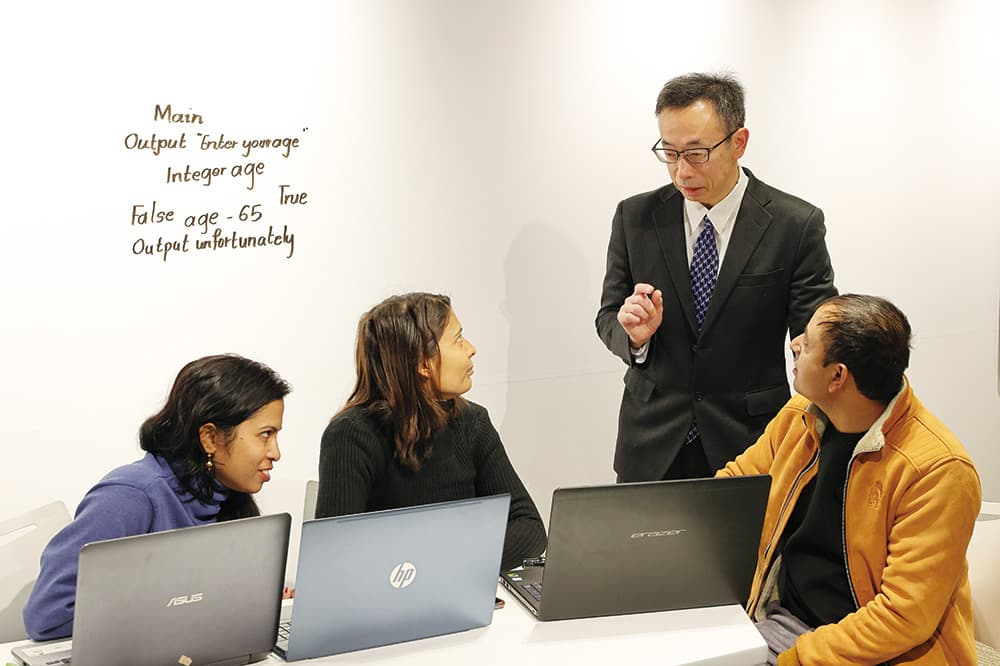
KCGI has a large number of faculty members specializing in education, and the Center for Teaching and Learning Excellence (CTLE) has been established under their leadership.The role of the Center is to lead innovation in teaching and learning at KCGI. Drawing on its expertise, the Center provides educational consulting to help faculty improve their courses and support students in taking greater ownership of their learning.
Activities of the Center for Teaching and Learning Excellence (CTLE)
The activities of the Center for Teaching and Learning Excellence (CTLE) are built around three pillars: “Educational Development and Reform,” “Higher Education Research,” and “Learning Enhancement.”Under “Educational Development and Reform,” the Center supports faculty members in enhancing their teaching practices through assistance with course design based on backward design, improvements to assessment methods using tools such as ICE rubrics, and the promotion of active learning.Under “Higher Education Research,” the Center conducts research and studies on trends in higher education in Japan and abroad, as well as teaching methods and learning environments.These research activities not only contribute to improving education at KCGI, but are also applied to teaching practices through faculty development (FD) programs and knowledge sharing across the university.Rather than separating research from practice, the CTLE emphasizes a continuous cycle in which challenges and insights gained from educational practice inform research, and research findings are then applied to further improve teaching and learning.Under the “Learning Enhancement” pillar, the Center works to improve education with a strong focus on the student perspective.
To provide better classes
Since its establishment, KCGI has continuously conducted both peer evaluations of teaching and student evaluations of courses.The CTLE is responsible for designing the evaluation criteria, analyzing the results, and providing feedback to faculty members to ensure that these evaluations lead to meaningful improvements in teaching rather than becoming merely formal surveys.By supporting faculty members in reflecting on and improving their courses based on student feedback and learning outcomes, the CTLE aims to create a more learner-centered educational experience.
Toward the development of classes that reflect the needs of students
Traditional university education has often placed too much emphasis on exam results, but what truly matters is whether students retain the knowledge they have acquired and can apply it in the real world.At the CTLE, we emphasize not only grades but also the quality of learning, placing feedback at the heart of education so that students can reflect on and improve their own learning.Since its establishment, KCGI has regarded student course evaluations not simply as surveys of satisfaction, but as an important source of information for understanding students’ actual learning experiences.By combining these with peer evaluations of teaching, KCGI has established a system for assessing the quality of education from multiple perspectives, incorporating the viewpoints of both students and faculty members.The CTLE designs and analyzes these two types of evaluations and provides the results as feedback to faculty members, supporting improvements in teaching methods and course materials.In this way, through a continuous cycle of evaluation and feedback, the CTLE supports both improvements in student learning and the enhancement of faculty teaching practices, while working to assure the overall quality of education at KCGI.
Certified Teaching Assistants (TAs) Connecting Faculty Members and Students
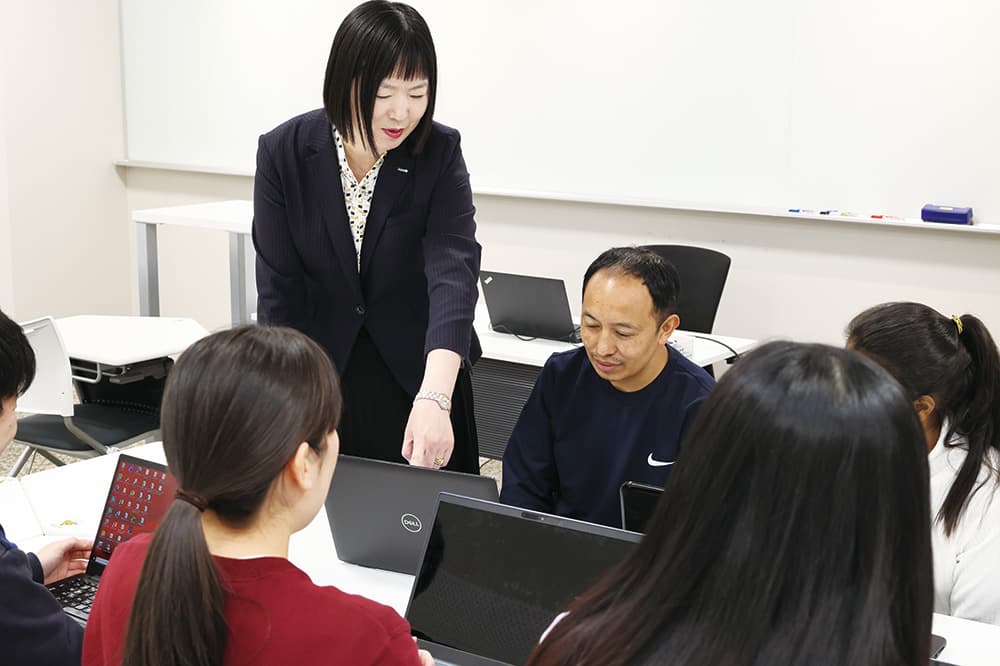
The Center for Teaching and Learning Excellence (CTLE) introduced the Certified Teaching Assistant (CTA) Program in the 2023 academic year as part of its efforts to create better learning experiences.This program is unique worldwide. Through specialized training, the CTLE certifies students as highly skilled teaching assistants, enabling them to support courses from both the faculty and student perspectives. Certified TAs not only assist faculty members but also help fellow students with their learning, serving as a bridge between instructors and students.
The role of a TA (Teaching Assistant) is to support faculty members with course-related tasks and assist students in their learning.KCGI’s unique Certified TAs go beyond the traditional role of teaching assistants, supporting initiatives such as flipped classrooms.Therefore, students must complete specialized training to become a Certified TA.Certified TAs not only support the implementation of flipped classrooms but also assist students taking the courses.Specifically, Certified TAs help ensure that students are properly viewing the preparatory videos, actively participating in group work during class, and correctly understanding the content and objectives of assignments given by faculty members. They also play a role in facilitating smooth communication between faculty members and students, as well as among students themselves.Certified TAs also assist faculty members in preparing video materials for pre-class learning in flipped classrooms. For example, they provide comments and feedback from the student’s perspective, evaluating whether the videos are clear and easy for students to understand.
Through these experiences, the Certified TA Program helps students develop the communication skills needed to serve as a bridge between faculty members and students.In addition, by having Certified TAs serve as a bridge between students and faculty members, the program aims to provide students who may feel hesitant to ask faculty members questions about course content or learning methods with opportunities for smooth and effective communication.Certified TAs are also expected to develop facilitation skills for effectively leading and supporting group work.This is intended to help students who serve as Certified TAs develop into professionals who can facilitate discussions and meetings to generate constructive ideas and opinions, while also contributing their own comments and perspectives to deepen the discussion after entering the workforce.
Students who have served as Certified TAs can demonstrate their value as prospective employees during job searches by highlighting the communication skills they developed as a bridge between faculty members and students and their ability to facilitate group work.
KCGI hopes that many students will actively participate in the training and take on the challenge of becoming Certified TAs, allowing them to develop and demonstrate their skills. At the same time, we aim to help students deepen their understanding of what they learn in class and develop the ability to apply that knowledge independently, supported by the attentive guidance provided by Certified TAs.
Building a Learning Community Together to Create Learner-Centered Classes
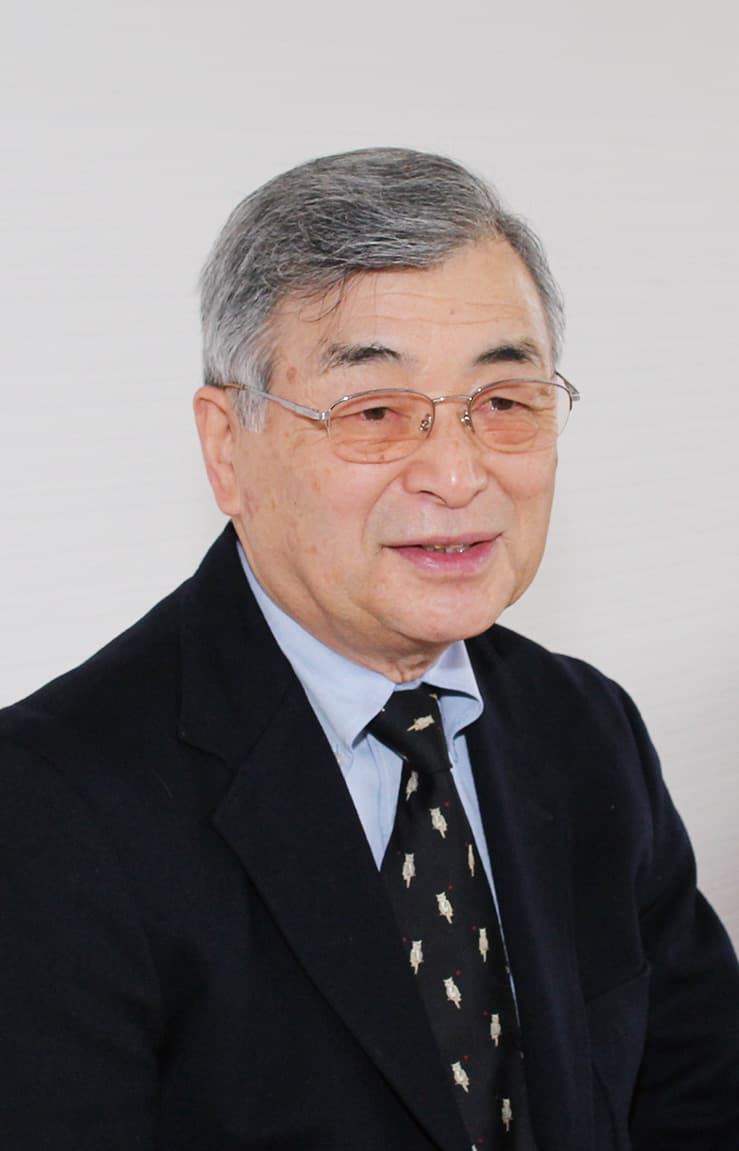
At KCGI, the 高等教育・学習革新センター is referred to as the Center for Teaching and Learning Excellence (CTLE). The Center conducts Faculty Development (FD) programs to enable faculty and staff to work together with students to create better classes, and has introduced the Certified Teaching Assistant (CTA) Program, a unique initiative with no known precedent worldwide.
Furthermore, the Main Building at KCGI’s Hyakumanben Campus in Kyoto, which features HyFlex (Hybrid-Flexible) classrooms, serves as a hub for IT education in the years ahead.Amid the profound changes of our time brought about by the emergence of AI technologies such as ChatGPT, we aim to foster a learning community in which faculty, staff, and students work together to create learner-centered classes, while placing a strong emphasis on communication with students.
“Faculty Development (FD),” a term commonly used by higher education institutions, refers to the systematic study and training undertaken by faculty and staff to improve educational content and teaching methods. At KCGI, however, FD also incorporates students into this process, with the aim of working together to create high-quality classes.
As the structure of higher education institutions, including universities, has undergone significant changes in the wake of the COVID-19 pandemic, KCGI has been well prepared to respond to these changes because it had already established a solid foundation for online and HyFlex classes.The Main Building at KCGI’s Hyakumanben Campus in Kyoto features HyFlex (Hybrid-Flexible) classrooms designed to accommodate a wide range of teaching formats with flexibility. These classrooms serve as a hub for delivering IT education suited to the needs of the times.
In recent years, the widespread adoption of artificial intelligence (AI), particularly generative AI, has brought both new opportunities and challenges to higher education.At KCGI, we have established our own guidelines for the use of generative AI on campus and are working to create an environment in which faculty, staff, and students can use AI appropriately for educational purposes.The CTLE supports the implementation of these guidelines and assists faculty and students in appropriately incorporating AI into course design and learning support.At KCGI, we value communication with students and will continue to advance learner-centered education by fostering a learning community in which faculty, staff, and students learn from one another and grow together.
At KCGI, we value communication with our students and aim to foster a learning community in which faculty, staff, and students work together to create learner-centered classes.