Summary
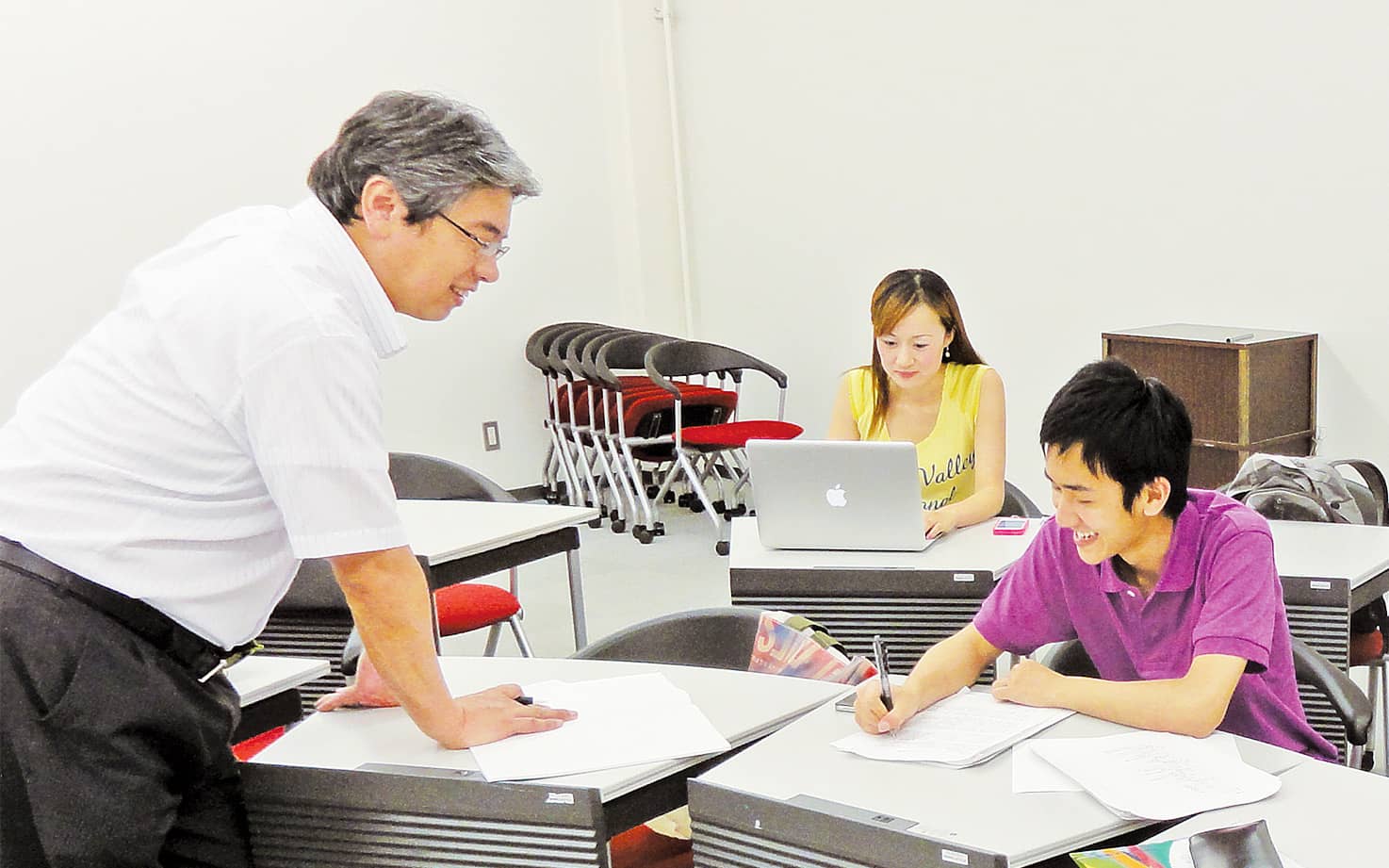
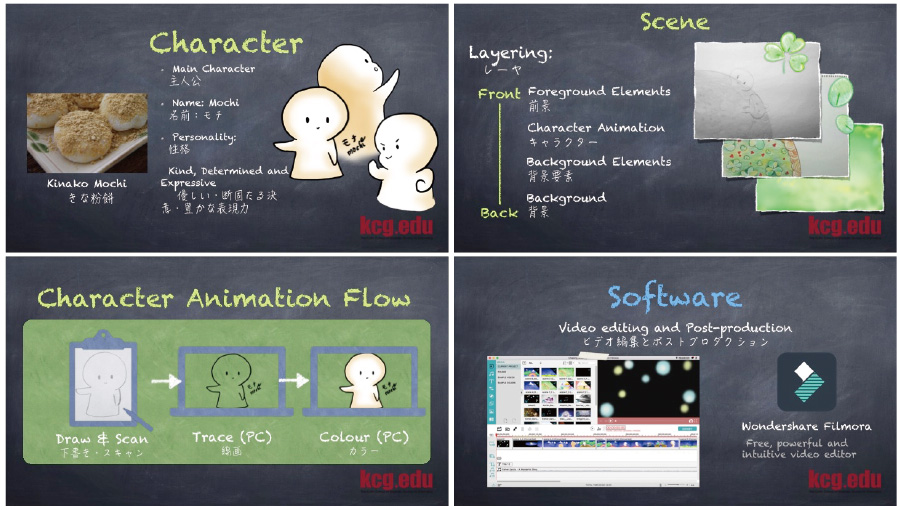
At KCGI, we focus on globally recognized Japanese cultural and creative industries, particularly manga and anime, as well as the broader content and creative industries. Our curriculum explores how these fields can be applied to web-based businesses. Through activities such as developing new business models based on research into existing content and creative industry models and gaining hands-on experience in anime planning and production, students experience a variety of real-world situations in the creative industries and learn practical approaches to identifying and solving specific challenges.Manga and anime are now entering an era of large-scale joint development, and it is not unusualto receive work order across countries.ICT plays an essential role in the increasingly global development of the content and creative industries.It is necessary to master not only basic techniques such as drawing, editing, and story building, but also ability to utilize digital tools to come up with solutions suited to individual situations.In this specialization, students develop these comprehensive skills, preparing them not only to create content but also to approach their work and lives with creativity.
Target Career Paths
- Producers who can comprehensively handle the planning, production and promotion of manga and anime content
- Content creators who can use various digital / analog production tools
- Directors who can effectively produce video composition and effects according to the goals of the production
- A marketing director who can plan content based on the market trends of manga and animation, such as education and entertainment
Themes of past Master Projects
- Production of animation that appeals to the protection of the global environment
- Production of anime that expresses the world of music
- Role of 3DCG in 2D animation
- Animation production introducing the origin of kanji
- Hand-drawn animation production using iPad
- Thoughts on the recent trends of anime production based on light-novels and business in Japan.
- Application of VR to daily life and business opportunities.
- Comparative Study of the Development of Chinese and Japanese Animation
- CG Reconstruction Model of Early Shuri Castle Based on a Hypothesis of Its Appearance During the Ryukyu Kingdom Era
- Implementation of Cartoon-Style Game Character Rendering in Unity3D
Message from Project Instructor
Professor Takao Fujiwara
Manga and anime are among Japan’s most iconic forms of subculture.Japanese anime, in particular, is characterized by its diversity, with stories set in virtually any location imaginable—from places around the world to outer space.As a result, Japanese anime has gained widespread popularity around the world, particularly among younger audiences, and has expanded globally through related merchandise sales and events such as Japan Expo.It also plays an important role in drawing global attention to Japanese culture.
ICT is also widely used in the field of anime, serving as a powerful tool for creating diverse new forms of expression.As content distribution has shifted from television broadcasts and theatrical films to online streaming, expanding into overseas markets has become increasingly easier.Why not study Japanese anime and pursue a career in the content industry?
Message from Project Instructor
Professor Koji Ueda
My expertise is in programming, multimedia, curriculum development related to ICT, and technology transfer to developing countries.Regardless of developed or developing countries, e-learning and excellent content will make it easier and more effective to receive quality education anywhere in the world.I hope that animation, a universal means of expression, will be used effectively in that process.
Creators of anime content need not only skills to create works by using digital tools, but also knowledge of content development methods and costs, as well as business models for the distribution of works.Their also needs to be flexibile in making content suitable to local market by understanding the realities and cultures of each country.Through this specialized field, I would like to develop creators who can grasp content production from a comprehensive perspective and disseminate their works to the world through ICT.
Digital Manga / Anime Production Environment
In the production of manga and animation, the production process using digital data with a liquid crystal tablet and a touch pen is taking root instead of the analog environment of hand-drawing with paper and a pen.In our school, we can deploy Adobe's Creative Cloud as a standard on our practice PCs to create interactive web-based animations, and freely add image and video processing and special effects.We have also introduced Retas Studio from Celsys, a popular software suite for animation production, to enable full digital production processes.
Kyoto Manga and Anime Society
It is a new place for personnel exchange open to all those who are interested in manga and anime
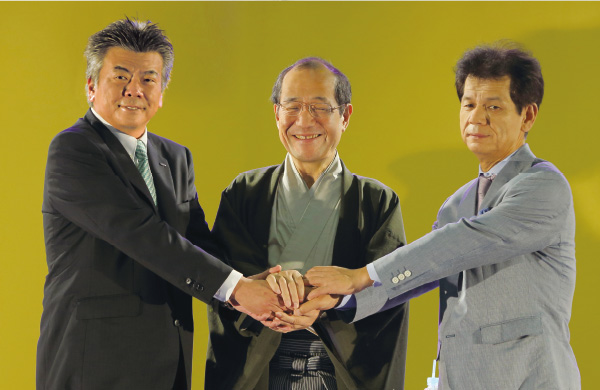
Following the declaration establishing the Kyoto Association for Manga and Anime Studies, (from right) Rikio Yoshida, then Vice Chairman of the Association of Japanese Animations; Daisaku Kadokawa, Mayor of Kyoto; and Wataru Hasegawa, President of the KCG Group, join hands. (September 7, 2013, Kyoto International Exhibition Hall “Miyako Messe”)
The Kyoto Manga and Anime Society was established at the "Kyoto International Manga and Anime Fair 2013" (Sponsored by Kyoto City, etc., and cosponsored by Kyoto Information School University, Kyoto Computer Gakuin, etc.) held at Kyoto International Exhibition Hall (Miyako Messe) in September 2013.We are widely recruiting members.
The society is unique in that not only companies, educational institutions, creators, and researchers involved in manga and animation, but also general fans, including junior high and high school students, can join. The association will continue its activities with the aim of creating an international network of manga and animation human resources in Japan.