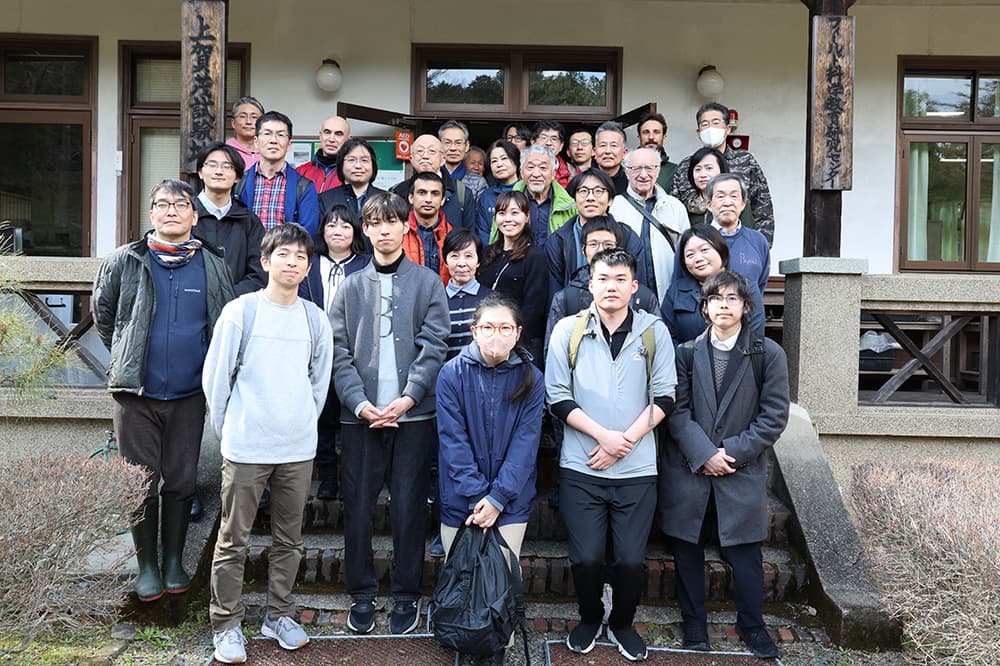
On March 23, 2026, students and faculty members of The University of Informatics Educational Corporation, The Kyoto College of Graduate Studies for Informatics (KCGI) and Kyoto Computer Gakuin (KCG) visited the Field Science Institute Kamigamo test site as part of a collaborative class with Kyoto University Field Science Education and Research Center (Field Science Institute) to learn about field observations and research activities there.This visit is also part of "Advanced Applied Informatics A: Introduction to Satellite Observation Data Analysis," a course taught by KCGI Professor Sonoyo Mukai, in which students learn the basics of vegetation observation from both ground and satellite perspectives.
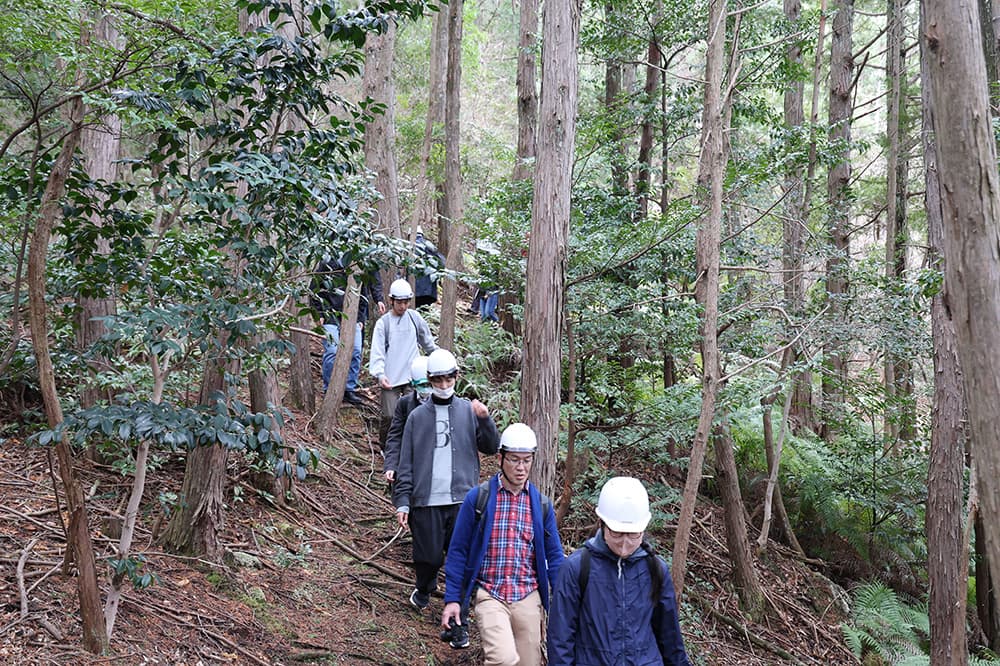
The Kamigamo Experiment Station, which boasts a total area of 47 ha, is mainly concerned with the introduction and cultivation of foreign tree species, and many species have been collected through seed exchanges with more than 100 botanical research institutes around the world.The collection of 70 species of the genus Pinus, 70 species of the subfamily Bamboo, and 150 species of the genus Rhododendron is particularly valuable, and is used by many other universities and research institutions as a teaching and research field in a wide range of fields.At Kamigamo Research Station, the participants were briefed on the history and activities of the test site by Mr. Ryunosuke Tateno, Director of the Field Science Education and Research Center, and Ms. Nao Sakanoue, Chief of Kamigamo Experimental Station, and then visited the herbarium, where about 10,000 trees and seeds collected from each research forest belong.Then we went to the field.While listening to explanations of what kind of plants exist and how they are managed in secondary forests, mainly cypress trees, and in arboretums, including foreign tree species, we considered how IT could be used in these areas.Students, who usually spend most of their time at the computer, were able to develop new ideas while walking in the field.
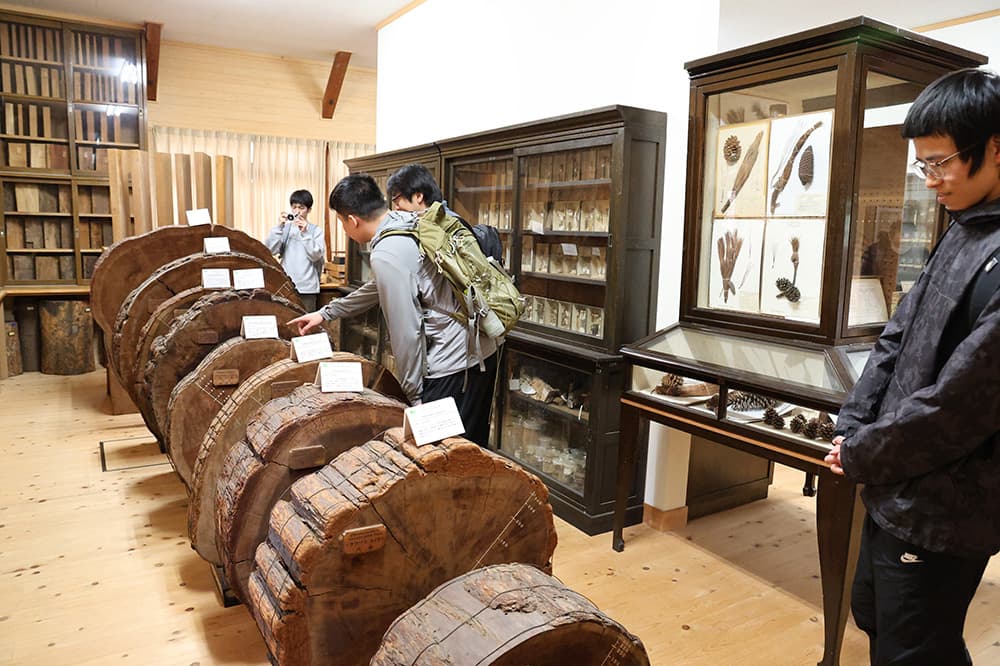
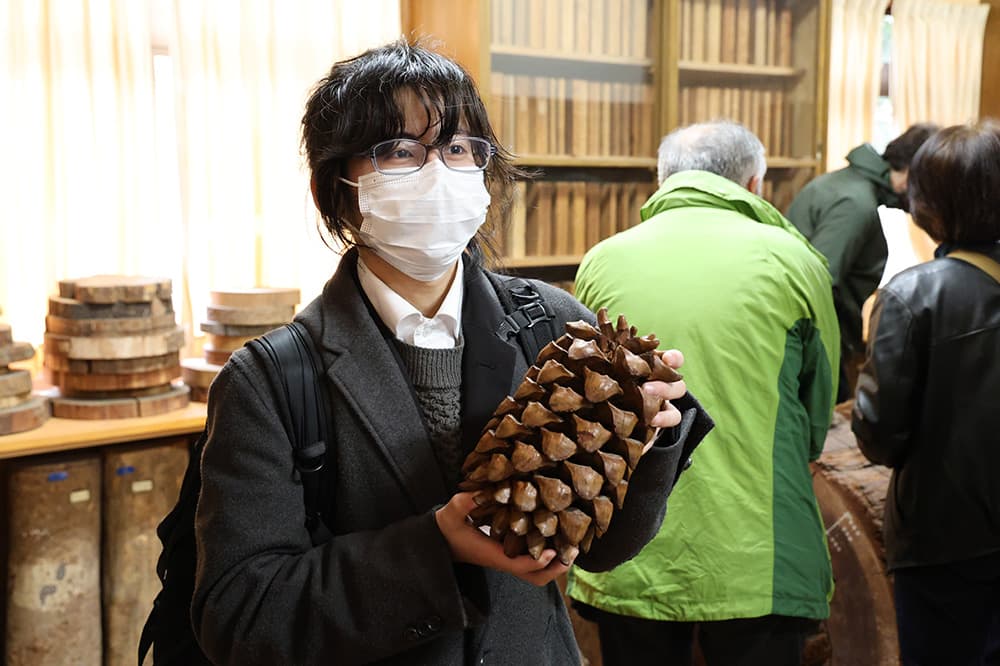
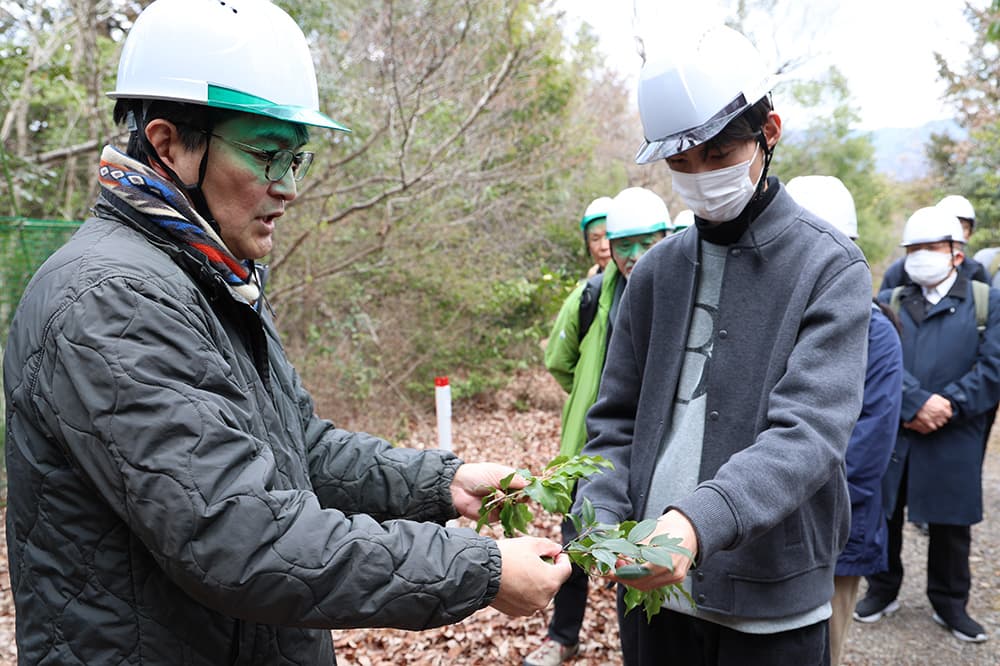
The students returned to KCGI Kyoto Ekimae Satellite and KCG Kyoto Ekimae Campus to attend Prof. Mukai's lecture.Based on the field experience, the students deepened their understanding of the importance of coordination between both detailed ground-based observations and satellite-based wide-area observations.
The Field Science Education and Research Center of Kyoto University has proposed "the Connectivity of Hills, Humans and Oceans" an integrated academic field that considers how to interact with nature with an emphasis on the environment, by analyzing the interactions of various ecosystems from forest to sea from the perspective of organisms and materials, as well as the activities and culture of people nurtured in these ecosystems.We promote social cooperation activities to learn about the connection between forests, villages, and oceans and their breakdown, and to create various activities for a sustainable society.KCGI/KCG and the Field Research Institute have signed a collaboration agreement in October 2025 to integrate the IT field and field science.