The Information University Educational Corporation—comprising Kyoto College of Graduate Studies in Information Science (KCGI) and Kyoto Computer Gakuin (KCG)—collaborates with partner institutions overseas to implement the “Discover Japan Program,” an international education program designed to foster students’ ability to collaborate on an international level. Through projects such as Japanese cultural experiences, Game Jams, and Work Jams—tailored to each institution’s educational objectives and needs—the program enables students to interact with one another while developing these skills.
From May through June 2026, 16 students and 2 faculty members from the Rochester Institute of Technology (RIT) in the United States visited Japan and spent about two weeks participating in various activities, based in Tokyo and Kyoto.The highlight of the event was the game jam with KCG students.Held at the KCG Kyoto Station Campus, this project brings together students of different nationalities and cultural backgrounds to form teams and work on game development. It requires communication that transcends language barriers and practical problem-solving skills.For the participants, it was a valuable opportunity not only to acquire and improve their technical skills, but also to develop their ability to collaborate internationally and work as a team.
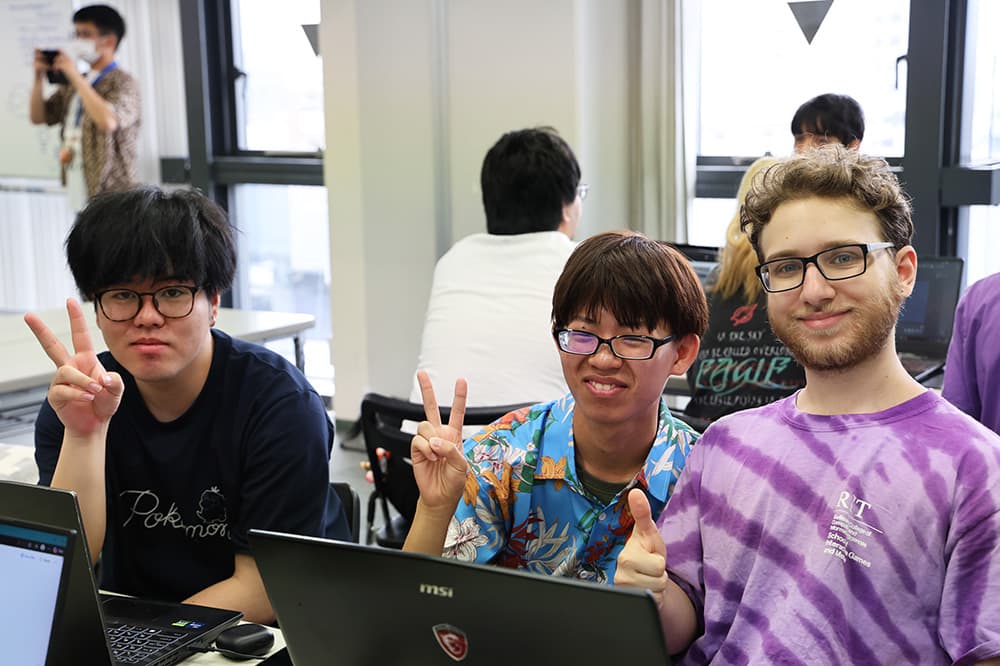
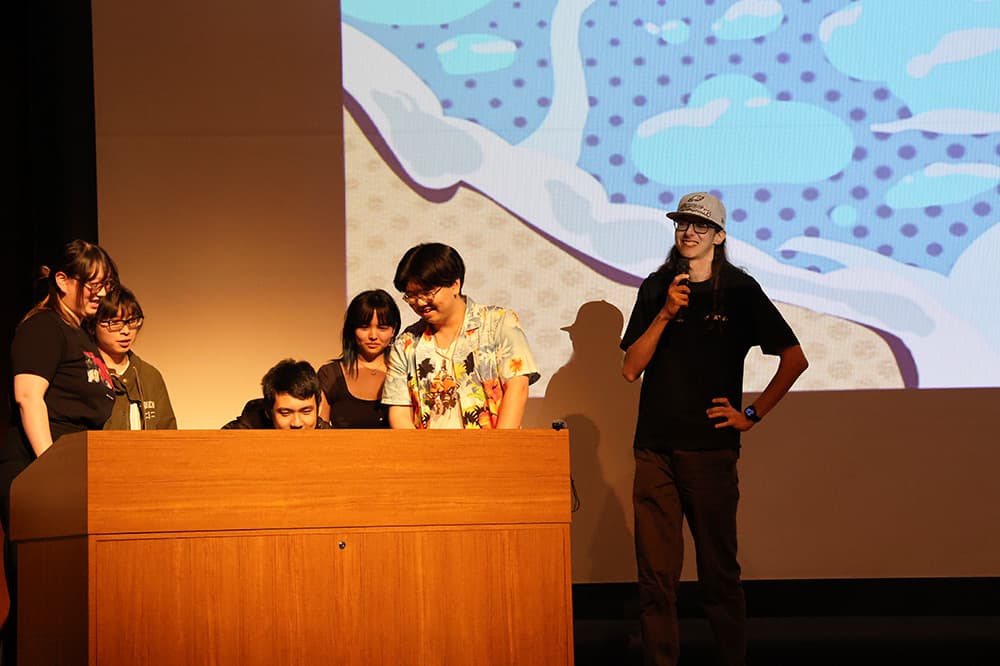
Click here for more details about the game jam.
https://www.kcg.edu/news/2026/06-09
RIT students also visited various parts of Japan.In Tokyo, they visited TeamLab Borderless, toured companies, and attended a Bunraku performance.During their free time in Akihabara, the students showed a strong interest in Japanese game and anime culture, and many of them visited game shops and the Pokémon Center.In addition, we enjoyed Tokyo in our own ways, such as taking a full lap on the Yamanote Line to see the cityscape.
After that, I traveled to Kyoto to attend "BitSummit," an indie game festival.We exhibited a game we co-developed with KCG students during an online game jam before coming to Japan.Having Japanese visitors actually play the game right in front of us and hearing their direct feedback was a valuable experience that will help us in our future game development.
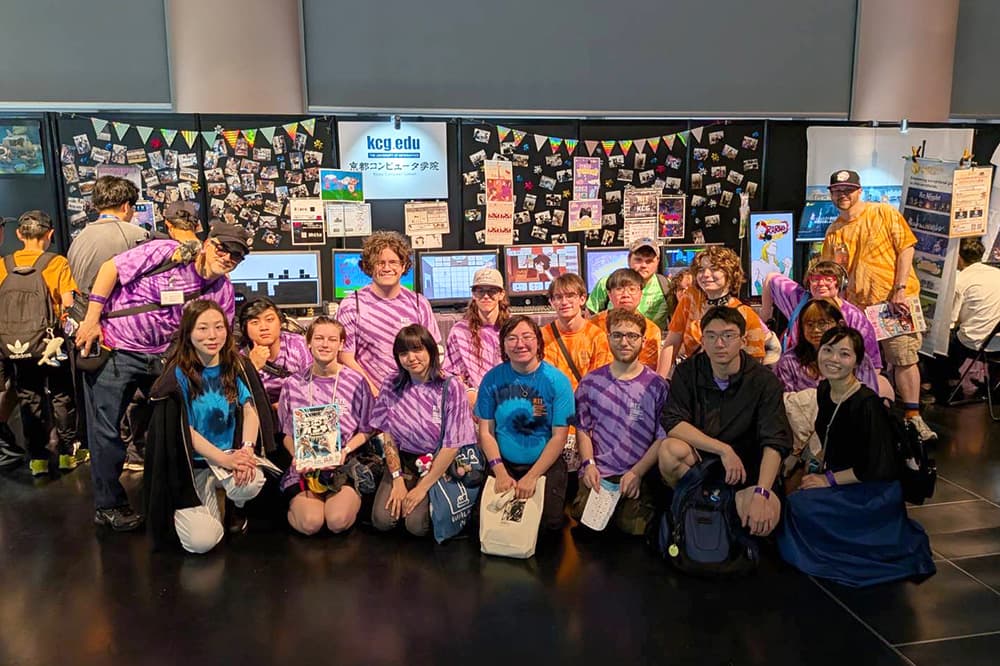
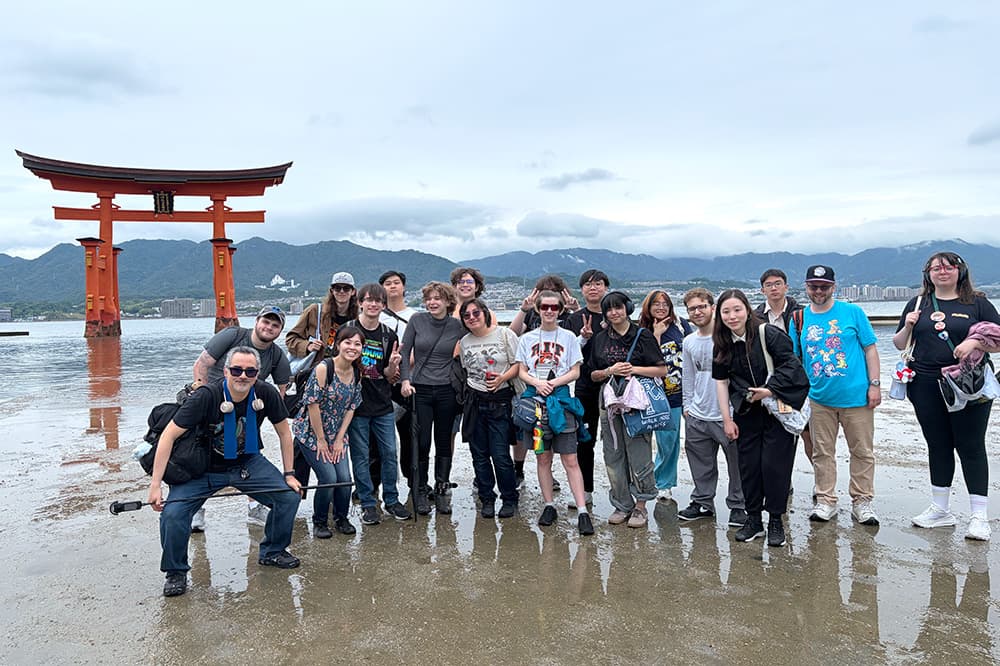
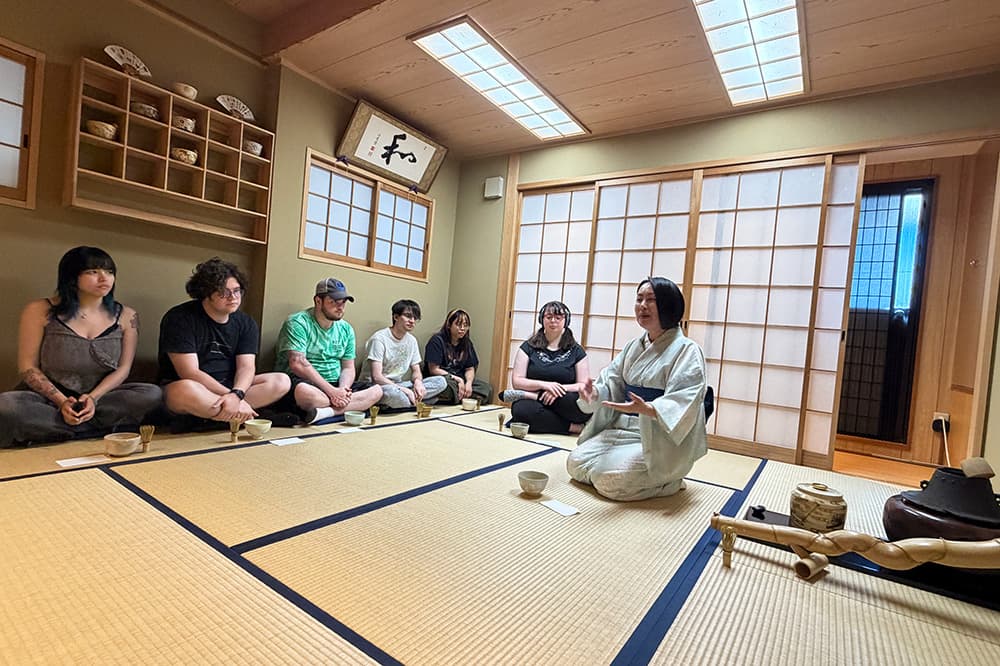
Experiences such as the tea ceremony and zazen meditation, as well as visits to Itsukushima Shrine on Miyajima in Hiroshima and the Hiroshima Peace Memorial Museum, appear to have been key components of the program that deepened the students’ understanding of Japanese history.Antonio, one of the participating students, said of the visit to Hiroshima, “The experience on Miyajima and the view from the mountaintop were the highlights of this trip,” while reflecting on what he learned at the Peace Memorial Museum, “It wasn’t exactly enjoyable, but it was extremely important.”He also remarked, “The ramen was particularly memorable, and the cold soba was a new experience for me—it felt refreshing,” expressing his appreciation for the appeal of Japanese culture through its cuisine.
During the company visits, the students showed great interest in the atmosphere of Japanese game development workplaces—which they don’t usually get to see—and in the creative ways these spaces are designed.The experience of getting a firsthand look at the development environments and corporate cultures of world-class game studios seems to have greatly inspired the career aspirations of students studying game development.
"The World Comes to KCG": A Place for Interactive Learning
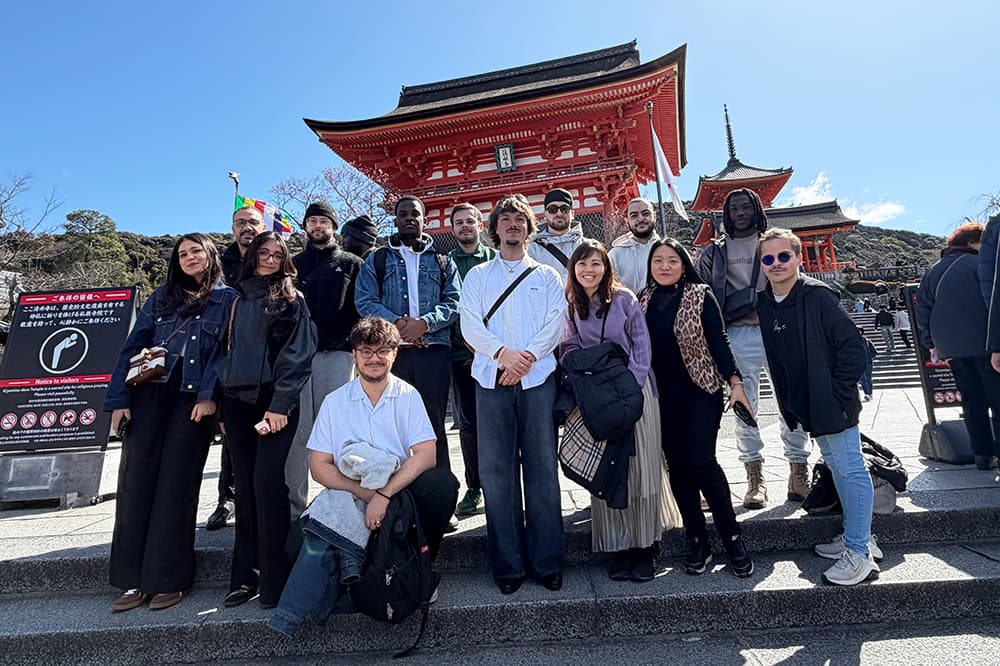
The concept of the Discover Japan Program is “Connecting Students Across Borders.”We have created an environment that fosters international exchange on the KCG and KCGI campuses, providing a space where students from diverse backgrounds can learn together.A key feature of the program is its “customized” approach, which allows for flexible design of the curriculum to meet the specific needs of each partner school. The duration of participation, course content, and visit locations are individually tailored to align with each partner school’s educational philosophy and areas of expertise. The KCG Group and its partner schools work together to provide the best possible learning opportunities.Centered on international collaborative learning activities such as Game Jams and Work Jams, the program incorporates a wide range of learning experiences—including exposure to Japanese culture through the tea ceremony and traditional performing arts, as well as company visits. With its rich and fulfilling content, the program consistently brings smiles to the faces of visiting international students and appears to provide an excellent opportunity for them to engage with diverse values.
For KCGI and KCG students, these initiatives have yielded significant educational benefits, including not only improved communication skills and cross-cultural understanding but also the development of an international perspective and greater self-confidence.For students at our partner institutions overseas, on the other hand, this provides an excellent opportunity to gain an understanding of Japanese society from the inside through exposure to Japanese culture and technology, as well as through cultural exchange.This interactive learning is a key feature of this program.
In today's increasingly globalized world, international collaboration skills and multicultural understanding are essential.This program will continue to offer a wide variety of hands-on experiences as part of its practical training.