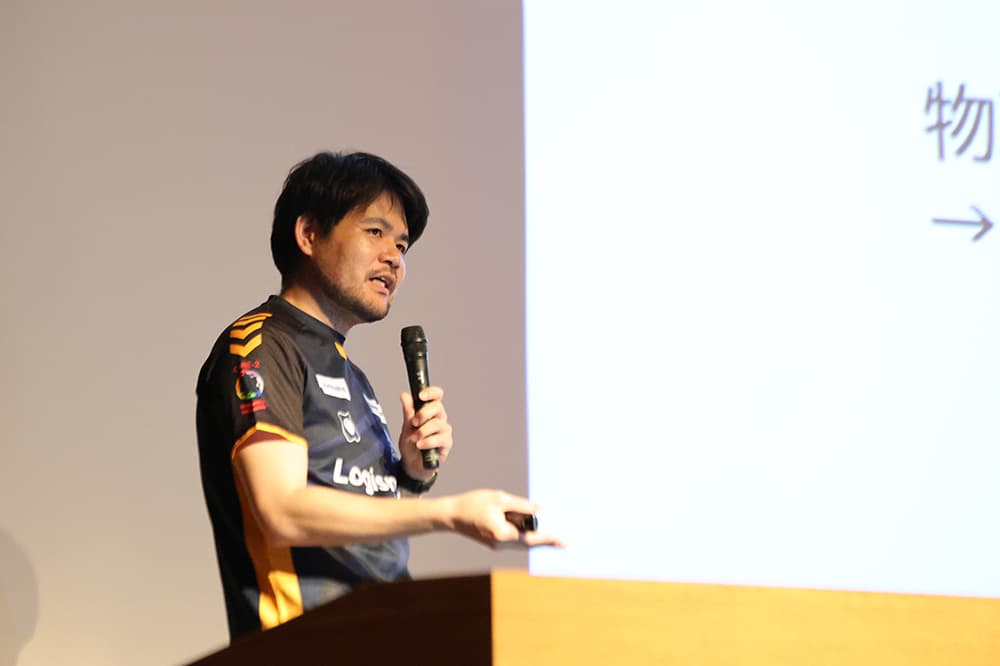
On October 29, 2026, the Kyoto Prefecture Information Industry Association (Chairman: Wataru Hasegawa, President of the KCG Group; hereinafter “Kyoto Information Industry Association”), a general incorporated association with its secretariat at Kyoto Computer College (KCG), jointly hosted the Kyoto Information Technology Seminar with the Kyoto College of Information Science (KCGI), an educational corporation;Kyoto Information Graduate University (KCGI), a school corporation under the Information University; KCG; the Kyoto Prefectural Small and Medium Enterprise Center; the NPO Yasashii Design; and the NPO Kyoto Nishijin Machiya Studio, held the Kyoto Information Technology Seminar in the 6th-floor hall of the KCG Kyoto Station Campus.Takumi Kawabuse, Associate Professor in the Department of Mechanical Engineering at the Graduate School of Engineering, Kyoto University, and Representative Director of the Next-Generation Robot Engineer Support Organization (a general incorporated association), delivered a lecture titled “Toward a Society Where Anyone Can Be a Robot Teacher: Will AI Robots Become Members of Society?”Members of the association, along with students from KCG and KCGI, attended the lecture and gained a deeper understanding of the cutting edge of robotics technology.
While Associate Professor Kawabushi is involved in research and education in robotics at the university, he also dedicates his “free time” to nurturing the next generation of engineers through robotics competitions and to developing the framework for these competitions.
In my presentation, I began by expressing my astonishment at the rapid pace of robot development in China and described how robots’ motor performance has improved dramatically in just a few years.When Associate Professor Kawabushi brought a small humanoid robot to the venue and demonstrated it—showing it running and kicking—the students gasped in amazement at its movements.It also explains the relationship between AI and technologies such as physical AI and reinforcement learning, in which robots learn behaviors through trial and error.While there are still many concerns, he expressed the view that, given Japan’s declining population, the social implementation of robots will become necessary, and he posed the question: “Shouldn’t we be preparing to welcome robots?”Finally, I urged young students to take an interest in robotics and give it a try, so that our country can continue to develop as a nation driven by science and technology in the years to come.
During the Q&A session following the lecture, students asked question after question, and Associate Professor Kawabushi answered each one thoughtfully."The important thing is to get started; by actually trying it out, you'll see what you can and cannot do."The statement, “It’s a good idea to start with simple things,” is a message that applies not only to robot development but to all kinds of challenges, and the students nodded in deep agreement.